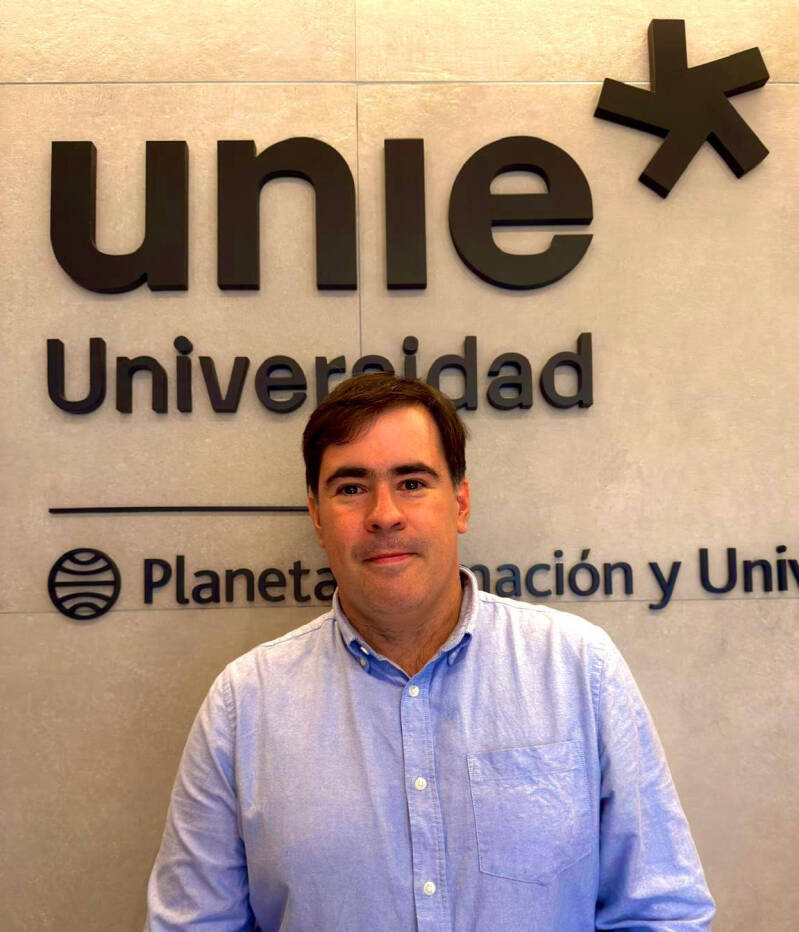
Jean Monnet blog features a conversation with Fernando Domínguez Sardou, Director of the International Relations Degree Program at UNIE University. A consultant in political analysis and strategy, he is a researcher and political scientist. He is a rigorous and highly qualified voice in the analysis of political scenarios.
How would you assess the current state of democracy in the European Union? Are there any immediate challenges?
The European Union today remains a unique democratic experiment: robust in its institutional design, yet somehow constrained in its capacity to generate a fully legitimate and participatory political space. Elections take place, rights are generally upheld, and the rule of law is a core value, not only in the institutions, but also in the daily life. Nevertheless, there is a persistent gap (what scholars such as Simon Hix have called "democratic deficit") between the scale of the EU decision-making and the citizen control over it. Hix argues that while integration has significantly increased the power of EU-level executives (the Commission and European Council), it has not been matched by a strengthening of the European Parliament, or the national parliaments' influence over the European Union affairs, resulting in decisions made through complex (even opaque) procedures, with limited public visibility.
I don't try to say that the EU is undemocratic. I prefer to say that some processes face a challenge on how they get democratic legitimacy, particularly in moments of crisis or high-stakes policy shifts. In the current context, which is marked by social polarization, institutional mistrust, and geopolitical uncertainty, this disconnection can weaken the legitimacy of the European project, even if its legal and procedural foundations remain untouched.
There is much discussion in academic circles and the press about the rise of far-right “populism” on the continent. Is it possible that this represents a real danger to the European Union, or does the European Union have a recourse or mechanism to defend itself against these positions?
The growing influence of far-right populist movements is one of the major political trends, not only in Europe, but globally speaking today. These actors, as defined by Cas Mudde, usually combine nationalism, euroscepticism, and sometimes, anti-pluralist rhetoric. In Europe this is particularly relevant, as in some member states, these actors have moved from the margins of the political system, to positions of real power.
This may constitute a systemic danger to the EU, but this depends largely on how institutions respond. These parties usually don't dismantle liberal democracy, but their rise often correlates with pressure on judicial independence, media freedom and minority rights. These stakes can pose challenges to the EU's main values, especially when national governments start to push the limites of the European rule of law.
Having said that, the EU is not without defense mechanism. Over the last decade, legal and financioal instruments, such as the rule of law conditionality mechanism, have been developed to protect democratic norms. More broadly, the resilience of civil society, independent media, and mobilized publics remains a critical line of the EU institutions' defense.
This moment also reveals a deeper vulnerability: as Hix and other authors point out, when citizens feel their voices are not represented at the European institutions, it opens the door to narratives that show the EU as distant or unaccountable. And this should be addressed in order to rebuild democratic trust.
If you could identify three areas for improvement in the political systems of the European Union, where would you focus your efforts?
- Enhancing democratic legitimacy and institutional transparency. As we previously said, one of the usual reucrrin criticisms is that EU decision-making ofhen lacks visibility. Strengthening the role of the European Parliament, improving the transparency of Council proceedings, and clarifying how key positions are filled would help to bring institutions closer to citizens.
- Expanding citizen participation. The European Union must find new ways to include citizens in the institutions, and in the political processes. Beyond elections, mechanisms like participatory digital platforms, citizens' assemblies, and even reforms to the European electoral system (with transnational lists, or new regulations on European Political Parties) could help create a more vibrant democratice space.
- Protecting and promoting "the principle of democracy" across member states. Even when the legal instruments to respond to democratic backsliding exist, the EU should continue refining its capacity to monitor, prevent and respond to such situations. This effort should also be proactive and narrative-based. The European institutions shoud communicate clearly why democratic values matter, and invest more in civic education and media literacy, in order to build a stronger democratic culture.
Añadir comentario
Comentarios