
International Scholars Convene in Poznań for Landmark "Effective Justice II" Seminar
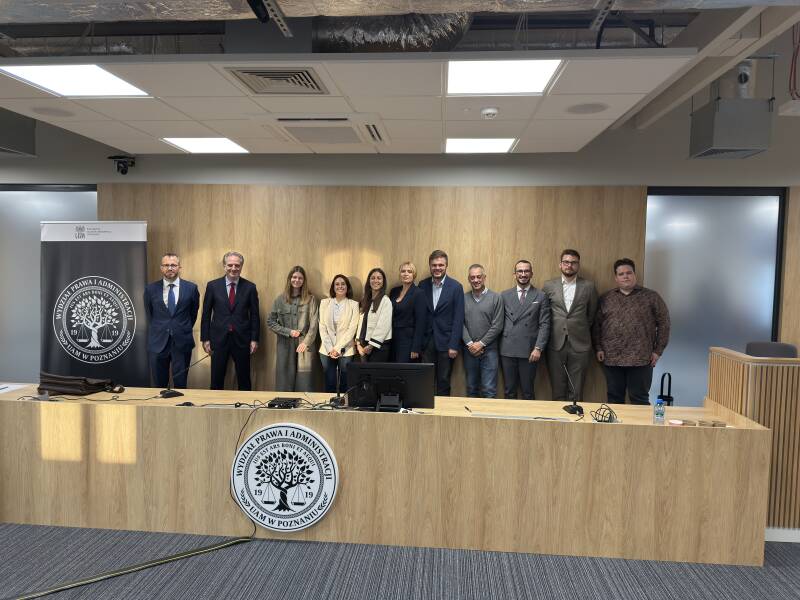
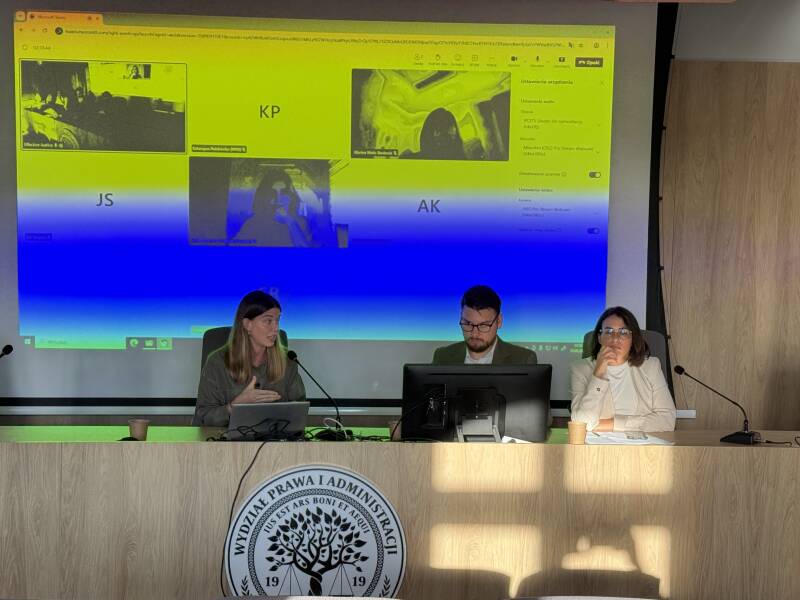
Leading legal experts and scholars from across Europe and beyond successfully concluded the international seminar "Effective Justice II" yesterday, September 19th. The virtual gathering, hosted by Adam Mickiewicz University, fostered critical dialogue on modernizing justice systems for the digital era, with focused discussions on human rights, electronic evidence, and international judicial cooperation.
The seminar, which formed part of the research project "Effective Justice II: Action - Consolidation of Teams," brought together prominent voices from academic institutions in Italy, Spain, Serbia, Poland, and South Korea. The event was hailed by participants as a significant step toward strengthening international academic collaboration in the field of judicial reform.
The program featured a series of engaging panels that delved into pressing contemporary issues:
-
Panel I offered a comparative perspective on modeling effective criminal justice in the digital era, with compelling contributions from researchers from the Universities of Trento, Bologna, and Urbino.
-
Panels II & III provided comprehensive analysis of the European, international, and inter-American dimensions of effective justice and human rights. These sessions were expertly led by Prof. Elena C. Diaz Galan of Rey Juan Carlos University and Prof. Harold Bertot Triana of UNIE University, respectively.
-
Panel IV addressed crucial practical challenges in "Effectiveness and Evidence," with particular focus on electronic evidence and new tools for mutual judicial cooperation, under the guidance of Prof. Xulio Xose Ferreiro-Baamonde from the University of A Coruña.
A notable highlight was the presentation of the project's new subsection on Legal Philosophy, demonstrating the initiative's commitment to interdisciplinary approaches in addressing complex judicial challenges.
The conference was conducted as part of the research project "Effective Justice II: Action - Consolidation of Teams," carried out within the ID-UB 175/02/UAM/0027 grant and funded by the Ministry of Science and Higher Education of Poland.
Añadir comentario
Comentarios